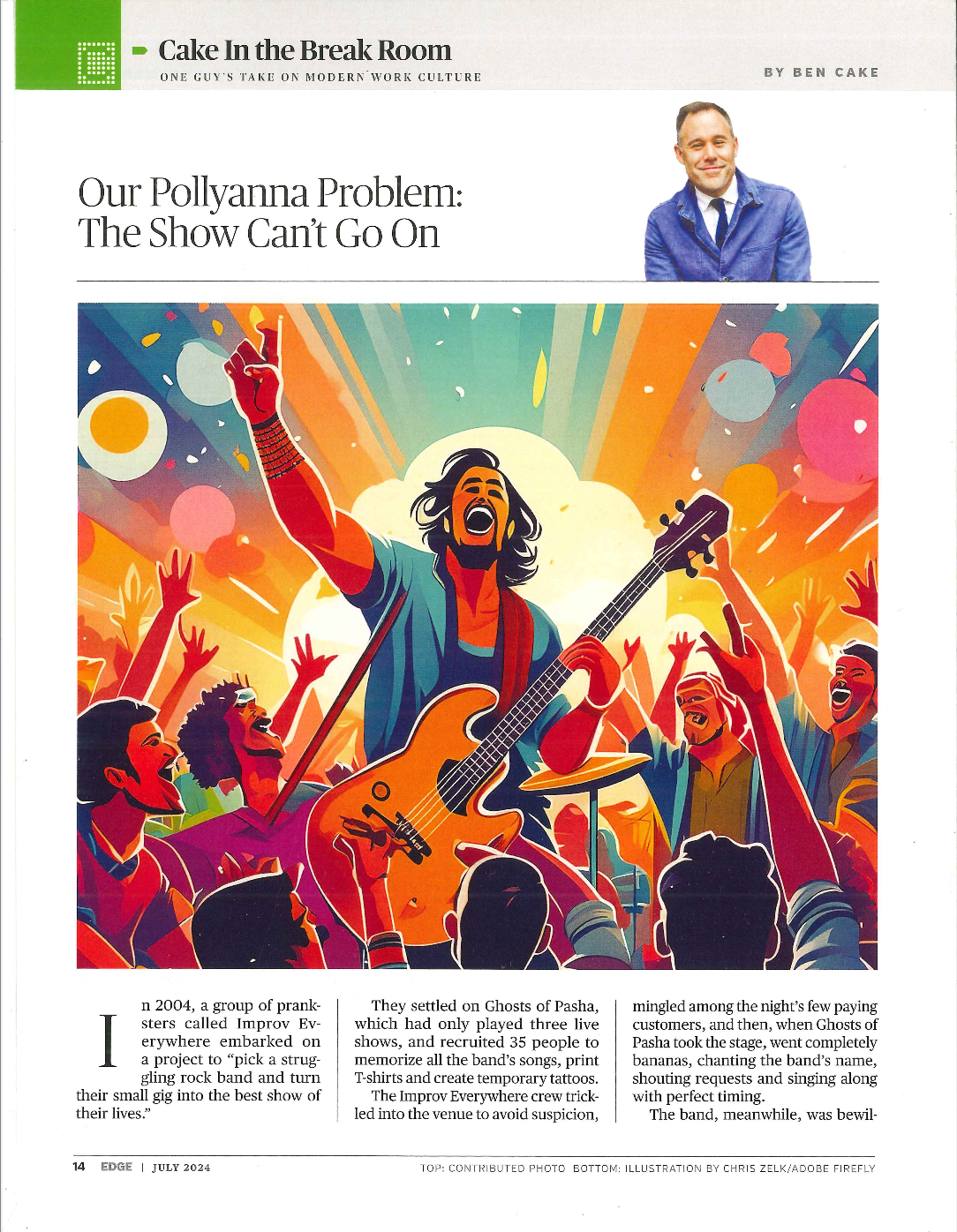
IN 2004, A GROUP OF PRANKSTERS called Improv Everywhere embarked on a project to “pick a struggling rock band and turn their small gig into the best show of their lives.”
They settled on Ghosts of Pasha, which had only played three live shows, and recruited 35 people to memorize all the band’s songs, print T-shirts, and create temporary tattoos.
The Improv Everywhere crew trickled into the venue to avoid suspicion, mingled among the night’s few paying customers, and then, when Ghosts of Pasha took the stage, went completely bananas, chanting the band’s name, shouting requests, and singing along with perfect timing.
The band, meanwhile, was bewildered. Milo Finch, the singer, later said, “I remember turning to the drummer…and being like, ‘What’s going on?’ Honestly, it was really off…guys were ripping off their shirts and swinging them over their heads in, like, helicopter fashion.”
Most bands fantasize about playing to an adoring crowd, so, on a superficial level, the Ghosts of Pasha got exactly what they wanted. But they couldn’t appreciate it, because they knew it was manufactured.
A lot’s happened since 2004, but I’ve been thinking about this prank more and more because I see similar performances going on in the workplace.
I recently witnessed one such show while at a branding agency, when the company’s head of growth said she wanted to “take some things off my plate, so I could focus on my Zone of Genius.”
Although it was nice to think I have a “Zone of Genius,” in that moment I couldn’t help but feel like the Ghosts of Pasha singer. Something was “really off.” Probably because up till then, my name and the word genius had never gotten anywhere near each other. Also because she then explained how a project that typically takes a month needed to get done in two days.
Later, I Googled “Zone of Genius” and learned the phrase was the topic of several self-help books and an innumerable number of blog posts.
Much has been said over the past couple years about “toxic positivity,” which is generally described as a kind of peer pressure that stigmatizes anything less than optimism, but toxic positivity is not really a new phenomenon. The term yes-man has been in use since 1912, after all, and the yes-man phenomenon captures many of the dynamics related to suppressing one’s true thoughts in order to pander to the powers that be.
What’s truly new, however, are the absurd verbal acrobatics getting employed to reframe the worst parts of work so people with less power might also feel better.
The trouble is, these tactics never work. Often, the inherent manipulativeness just adds insult to injury.
For instance, instead of getting “let go” or “laid off,” employees are now sometimes told their “position has been eliminated,” as if learning “We don’t need anybody to do what you’re doing” will provide comfort.
An even more recent entry is the concept of “feedforward”—because “feedback” is apparently too threatening—wherein focus is turned toward how a better outcome could be achieved in the future rather than scrutinizing previous work.
As much as I dislike the term “Zone of Genius,” it’s important to recognize the person who used it wasn’t the problem. The problem was that a month-long project can’t get done in two days.
Put another way, this new strain of managerial hogwash isn’t due to a deficiency of character but is rather a symptom of the way people are tasked with smoothing out significant organizational issues with nothing but buzzwords they learned on TikTok.
These terms get invented as a way to cope with impossible situations but, much like tequila shots, the coping mechanism just makes the situation worse because it doesn’t address the issue and causes people to say strange things.
And while the intention might be sincere, these efforts intensify the growing distrust and alienation we’re seeing in the workplace.
Many companies have faced legitimate economic headwinds this year, which has caused strain and difficult decisions. But that’s no invitation for charades. So if you find yourself in a no-win situation, do everyone a favor, drop the act, and just be a person.
That’s the only role worth playing.