EARLY IN 2019, A COWORKER STOPPED BY MY desk and asked if we could go for a walk. It was a random request, but I said sure, because at the time I welcomed any excuse to avoid my job.
We headed to the elevator in a strange silence that signaled something serious. The ride downstairs was just as quiet. We stared at our feet. And then the elevator doors opened, and he was off, speaking as quickly as he strode. I had to do that awkward Olympic race-walk to catch up.
We took many, many laps around the building as he discussed his career ambitions, which would require moving from the town where he grew up, and whether he could (or should) pursue them. I asked questions in an attempt to distinguish between his personal sense of family loyalty and a more general fear of failure. He was sweating because he had some big decisions to make. I was sweating because he wouldn’t slow down.
Eventually, much to my relief, we stopped walking. But as I caught my breath, he asked if I would be his mentor.
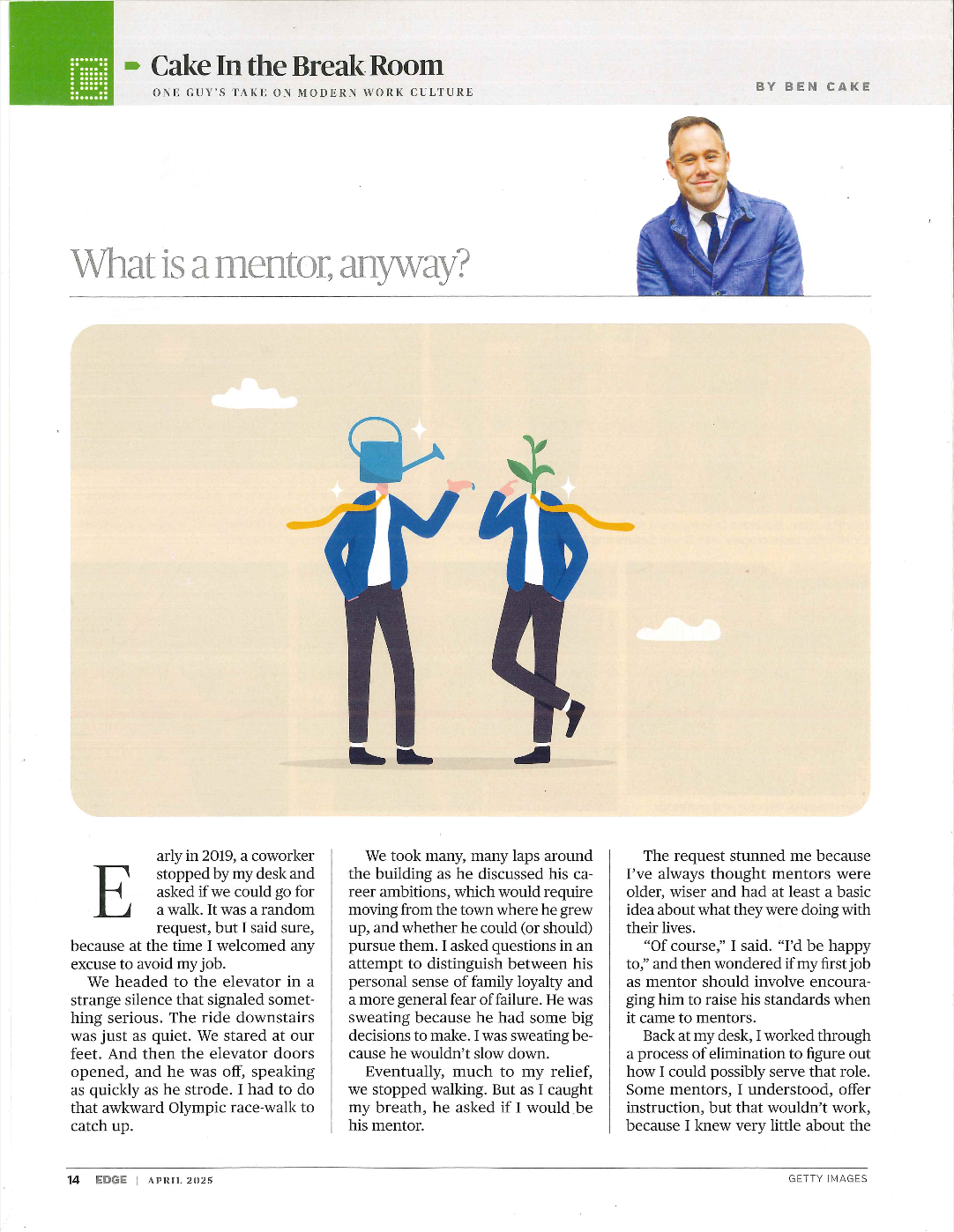
The request stunned me because I’ve always thought mentors were older, wiser, and had at least a basic idea about what they were doing with their lives.
“Of course,” I said. “I’d be happy to,” and then wondered if my first job as mentor should involve encouraging him to raise his standards when it came to mentors.
Back at my desk, I worked through a process of elimination to figure out how I could possibly serve that role. Some mentors, I understood, offer instruction, but that wouldn’t work, because I knew very little about the field he wanted to enter. Others have the status, power, and connections to fast-track a protégé up a professional ladder, but it’s laughable to think I’ll ever have status, power, or connections.
These dead ends sent me back to the question of why he would even ask. My best guess was that he needed someone who had time on their hands and with whom he’d feel comfortable plotting an escape from our current employer. In that light, I felt accurately sized up. Perhaps this fellow was savvier than I thought.
I scheduled a recurring meeting: On Fridays, we would have lunch and either talk about his goals or watch lectures related to his field of interest. During these meetings, I sought to guide him toward a legitimate role model—someone whose work he could learn from—and asked questions with an eye toward ways he might talk himself out of progress. On that matter, I had some experience.
A few months later, he was placed in a department I oversaw, and when I gave him assignments, I highlighted how working on them would be transferable to what he wanted to do in the long term. Later still, after we’d both left the company, I answered the phone whenever he called. Everything else he did on his own.
Over time, his calls became less frequent, and I comforted myself with the idea that he’d replaced me with someone more qualified. Then, about four years after our impromptu half-marathon, I received a handwritten letter from him. He explained he’d achieved his goal, and thanked me for “dreaming big” for him.
Again, I was stunned. But also overcome. My face leaked a weird amount of tears, and the whole time, the logical part of my brain asked, Why are you reacting this way when you didn’t really do anything? It took another moment to realize it was simply because I was happy for him. It was also in that moment I understood what a mentor is: nothing more than a friend, someone who shows up and provides encouragement without an agenda, someone who pays attention, and who offers respect regardless of how things play out.
We’re in the midst of a period that promises to become ever more volatile. Many of us will be tested and, in turn, will need such a friend. The good news is, if I can do it, anyone can.